
Abstract
Objective: To explore how parents of children with autism spectrum disorder (ASD) implement dietary and nutraceutical therapies at home, and to understand the challenges, facilitators, and perceived outcomes that shape their use in real-world settings.
Design: A qualitative study using abductive thematic analysis to explore parent-reported experiences with implementing dietary and nutraceutical strategies for their children with ASD.
Setting: Remote interviews conducted with parents residing in Canada and the United States.
Participants: A total of 10 semi-structured interviews were completed with 12 parents of children aged <18 years with ASD. Participants represented diverse regions, educational backgrounds, household structures, and linguistic environments.
Outcome measures: Parent perspectives on feasibility, decision-making processes, child responses, and perceived barriers or supports associated with dietary and nutraceutical strategies.
Results: Six themes were identified from parent interviews describing challenges in implementing dietary and nutraceutical interventions for children with ASD. These included parents as architects of care, in which caregivers assumed responsibility for researching, coordinating, and evaluating interventions; food as medicine and messenger, wherein behavioral and gastrointestinal responses served as real-time indicators of effectiveness; emotional weight and resilience, reflecting the psychological and practical burden experienced by caregivers; when systems fail, describing fragmented or insufficient medical guidance; compliance and the complexity of control, shaped by sensory sensitivities, rigid food preferences, family dynamics, and child autonomy; and rejection of one-size-fits-all solutions, emphasizing individualized, iterative approaches over standardized protocols.
Conclusions: Parents face numerous sensory, emotional, and systemic challenges when attempting dietary and nutraceutical therapies for children with ASD. Greater clinical support and more individualized, evidence-informed guidance are needed to help families apply these strategies sustainably and determine which children are most likely to benefit.
Introduction
Autism spectrum disorder (ASD) is a complex neurodevelopmental condition that affects approximately 1 in 36 children aged ≥8 years in the United States.1 Children with ASD often experience a complex interplay of factors that can significantly influence their capacity to attain and sustain a high quality of life.2 These factors, which encompass a broad spectrum of social, communicative, and behavioral challenges, have been found to be associated with underlying metabolic and immune imbalances, as well as nutritional deficiencies, in this population.3,4 The cumulative effects of these underlying dysfunctions can affect an individual’s developmental trajectory and overall well-being.
Current standard of care for ASD emphasizes behavioral interventions as the primary therapeutic modality,5 with pharmacological agents typically reserved for managing associated symptoms such as irritability, aggression, or hyperactivity.6 Although behavioral therapies can be effective, their impact may be limited when underlying biomedical issues are not addressed.
Recent discoveries have highlighted the potential therapeutic use of dietary and nutraceutical interventions in managing ASD symptoms.7–9 The use of the term nutraceutical throughout this paper refers to food-derived substances or bioactive compounds that provide physiological or medical benefits beyond basic nutrition. Nutraceuticals include isolated nutrients, dietary supplements, botanical compounds, and functional foods used in clinical or preventive contexts.10,11 Outcomes of these dietary and nutraceutical approaches, however, remain highly inconsistent, and no clear consensus has emerged regarding the most effective strategies. Beyond this scientific uncertainty, families often face substantial difficulties in putting dietary and nutraceutical protocols into practice. Parents frequently report barriers such as child resistance due to sensory sensitivities and food selectivity, difficulty achieving adherence in home and school environments, managing side effects, and receiving conflicting advice from healthcare providers or other caregivers.12 These barriers can influence both adherence and the overall effectiveness of the intervention.
Given the increasing interest in integrative approaches for ASD, understanding parents’ experiences with dietary and nutraceutical interventions is essential for informing patient-centered clinical guidance. Prior qualitative research has identified barriers such as food selectivity and adherence challenges in this population, while systematic review evidence indicates inconsistent efficacy of commonly implemented interventions, including gluten- and casein-free diets.13,14 However, there remains a paucity of research examining parents’ real-world experiences with implementing dietary and nutraceutical approaches for ASD, particularly in relation to the complex processes involved in decision-making, navigating perceived physiological responses, managing resistance within the child–caregiver dynamic, and engaging with broader systemic barriers.
The present study addresses this gap by exploring the challenges parents face when implementing these interventions and examining how these interconnected factors shape treatment adherence, perceived effectiveness, and overall outcomes from the parental perspective. This approach provides a more integrated understanding of how practical, behavioral, and systemic influences converge to affect intervention success in real-world settings.
Materials and Methods
Study Design and Ethical Considerations
This qualitative study explored parental experiences with dietary and nutraceutical interventions in children diagnosed with ASD. Ethical approval was granted (Institutional Review Board No. HZ101124). All participants provided informed consent prior to data collection, in accordance with the Declaration of Helsinki.15
Participant Recruitment and Sampling
A combination of purposive and snowball sampling strategies was used to recruit parents or primary caregivers of children with a physician-confirmed ASD diagnosis. Purposive sampling ensured the inclusion of participants with direct, relevant experience in dietary and nutraceutical decision-making for their child. Snowball sampling was subsequently used, whereby enrolled participants were invited to share study information with other eligible individuals in their networks.
Pre-scripted emails and electronic posters were created to support recruitment. Recruitment channels included ASD-focused community organizations, social media platforms (e.g. Facebook, Instagram), professional networks (e.g. online newsletters, internal emails), clinical care settings (e.g. pediatric medical and nutritional care practices), and word-of-mouth referrals. Recruitment continued until thematic saturation was reached at n=10 participants. In this study, thematic saturation was defined as the point during coding and analysis at which no new relevant information, codes, or insights were generated from subsequent interviews, and existing themes were well developed and supported by the data.16
Eligible participants for this study included those who were fluent in English and were living in the United States or Canada. Participants were excluded from the study if they were not directly involved in the care of a child with ASD, if they were <18 years of age, or if they lived outside of the United States or Canada.
Data Collection
Demographic information was collected from each participant using a structured questionnaire prior to the interview. This included parent’s age, sex, profession, income range, state/province of residence, and the age of the child with ASD. These data were used to contextualize qualitative findings and identify trends and patterns across different participant groups.
Semi-structured, in-depth interviews were conducted via secure video conferencing (Microsoft Teams) between November 2, 2024, and March 20, 2025, with parents and primary caregivers of children aged 2–17 years who had a physician-confirmed diagnosis of ASD. The aim was to capture their experiences, perceptions, and challenges regarding the use of diet and supplements to address ASD-related symptoms. The interview guide was developed based on a priori knowledge, existing literature, and the study aim.
Interviews were between 25 min and 2 h in duration, with time variations influenced by participant responsiveness and the need for follow-up clarification. All interviews were audio-recorded and transcribed verbatim using Otter.ai, Inc. transcription software (Mountain View, CA, USA). JB and TM read each transcript in full and manually cleaned and anonymized the text to remove personal identifiers (e.g. names, locations), eliminate filler words and non-verbal utterances (e.g. “um,” “uh,” “you know”), and correct obvious transcription errors. Field notes were taken during and after each interview to capture non-verbal cues, contextual details, and preliminary analytic impressions.
AI-Assisted Data Analysis
Thematic analysis was conducted following Braun and Clarke’s six-phase framework (2006) using an abductive approach that combined inductive and deductive reasoning.17 In the absence of established protocols for incorporating large language models (LLMs) into thematic analysis, a customized artificial intelligence (AI)-assisted workflow was developed (Figure 1), drawing on recent literature describing the integration of LLMs into qualitative research.18–20
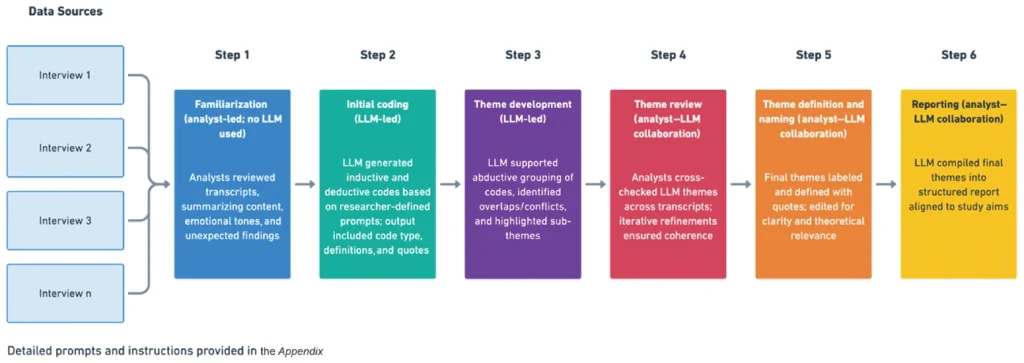
Individual interview transcripts were initially analyzed through analyst-led familiarization (Step 1), followed by LLM-assisted coding and theme development using structured, researcher-guided prompts aligned with Braun and Clarke’s six-phase framework (Steps 2–5). Analysts iteratively reviewed and refined themes across transcripts to ensure coherence and relevance. Final themes were defined and synthesized into a structured report (Step 6). Detailed prompts and instructions used at each stage are provided in the Appendix to support reproducibility. AI, artificial intelligence; LLM, large language model.
Although manual coding of the dataset was feasible, ChatGPT-4 (OpenAI, San Francisco, CA, USA) was employed to enhance efficiency and transparency by streamlining data organization, summarization, and pattern recognition. This approach addressed emerging recommendations in the literature for combining human expertise with AI efficiency in qualitative health research, particularly where methodological transparency and reproducibility are prioritized.
By offering consistent and reproducible coding suggestions, ChatGPT-4 helped identify early patterns in the data while minimizing potential researcher bias. Rather than replacing human judgment, the AI functioned as a companion in the analytic process.21,22 Each output was carefully reviewed, discussed, and refined by the research team to ensure that the coding remained accurate and contextually grounded. This collaborative approach allowed the researchers to maintain full reflexive engagement with the data while benefiting from the LLM’s organizational efficacy. The full LLM prompt is available in the appendix.
During analysis, ChatGPT-4 produced three hallucinations, whereby it synthesized or paraphrased text segments into quotes that did not exist verbatim in the transcripts. These fabrications appeared to capture the general sentiment of participant responses rather than actual phrasing. All outputs were systematically cross-checked against original transcripts by the human research team to ensure accuracy and preserve the integrity of the qualitative data.
Thematic analysis was performed using the following sequence of researcher–ChatGPT-4 interactions.
Step 1—Familiarization: Two analysts, JB and TM, separately read each transcript in full while taking field notes summarizing content, highlighting emotional tones, and noting unexpected findings that emerged from the transcripts.
Step 2—Initial Coding: ChatGPT-4 was instructed to apply both deductive codes (informed by the interview guide and study aims) and inductive codes (emerging directly from the data) to each transcript individually. ChatGPT-4 was then prompted to produce a tabular output including code, type (deductive vs. inductive), and supporting quotes with participant labels.
Step 3—Theme Development: Based on coded data from Step 2, the analysts instructed ChatGPT-4 to identify candidate themes, group related codes, note overlaps and conflicts, provide grouping rationales, and highlight emerging sub-themes.
Step 4—Theme Review: The analysts cross-checked the ChatGPT-4-generated themes against the original transcripts, refining theme boundaries to ensure internal coherence and distinctiveness. Iterative feedback loops between the analysts and ChatGPT-4 were used to resolve discrepancies.
Step 5—Theme Definition and Naming: Final themes were defined with precise labels, operational definitions, key ideas, and illustrative quotes. The thematic drafts generated by ChatGPT-4 were edited for conceptual clarity and critically evaluated against existing theories to ensure alignment, extension, or meaningful challenge to the theoretical framework.
Step 6—Reporting: Using all Step 5 outputs collectively, the analysts applied the final ChatGPT-4 reporting prompt to produce a comprehensive thematic report that had structured theme summaries, rich participant quotes, and aligned with study aims.
Data Management and Reporting Standards
All interview recordings, transcripts, and AI-generated materials were stored on encrypted, password-protected servers accessible only to the research team. Personal identifiers were removed prior to analysis, and de-identified datasets were retained in accordance with institutional policy. The study was conducted and reported in compliance with the Consolidated Criteria for Reporting Qualitative Research (COREQ) guidelines to ensure comprehensive and transparent reporting (COREQ guidelines are available on request from the authors).23
Results
Participant Demographics
A total of 10 interviews were conducted, representing the perspectives of 12 parents of children aged <18 years with ASD, including 10 mothers and 2 fathers (Table 1). In two interviews, both parents (mother and father) participated together, while the remaining interviews were completed by mothers alone. Two interviews included parents managing multiple children (n=2) with ASD in the household. Parents ranged in age from 34 to 54 years, all were currently married, and the number of children aged <18 years in the household ranged from 1 to 3 (including the child(ren) with ASD). Participants resided across several regions of Canada (Ontario, Manitoba, British Columbia) and the United States (Texas, North Carolina, Oregon). Primary languages spoken at home included English, Spanish, Russian, and bilingual households (English/Arabic). Educational attainment was relatively high, with representation from high school diplomas through doctoral-level degrees. Employment status varied and included full-time employment, self-employment, unemployment, and volunteer roles. Household income ranged widely, from less than $50,000 USD to more than $150,000 USD annually.
| Characteristic | n (%) |
|---|---|
| Parent role | |
| Mothers | 10 (83%) |
| Fathers | 2 (17%) |
| Age (years) | |
| 34–39 | 2 (17%) |
| 40–49 | 6 (50%) |
| 50–54 | 4 (33%) |
| Mean age (estimated from grouped data): 45.7 years | |
| Marital status | |
| Married | 12 (100%) |
| Children <18 years in household | |
| 1 | 4 (33%) |
| 2 | 5 (42%) |
| 3 | 3 (25%) |
| Highest education completed | |
| High school diploma | 2 (17%) |
| Bachelor’s degree | 4 (33%) |
| Master’s degree | 2 (17%) |
| Doctorate/MD/PhD | 1 (8%) |
| Not specified | 3 (25%) |
| Employment status | |
| Full time | 3 (25%) |
| Self-employed | 4 (33%) |
| Unemployed/volunteer | 3 (25%) |
| Not specified | 2 (17%) |
| Household income (annual), USD | |
| <$50,000 | 3 (25%) |
| $50,000–100,000 | 3 (25%) |
| $100,000–150,000 | 2 (17%) |
| >$150,000 | 1 (8%) |
| Not specified | 3 (25%) |
| Primary language spoken at home | |
| English | 8 (67%) |
| Spanish | 2 (17%) |
| English/Arabic bilingual | 1 (8%) |
| Russian | 1 (8%) |
Key Themes
A total of six themes were identified through thematic analysis (Table 2).
| Theme | Quote |
|---|---|
| Parents as architects of care | “Everything that I have found out about autism has been through my own research, as well as talking to other parents of children who have autism.”—Participant 02 |
| “We’ve had to become our own advocates, our own subject matter experts, our own investigators - of every snake oil salesman. Because there are no answers.”—Participant 10a | |
| “So, for my oldest son, it comes down to a lot of the behaviors that I’m seeing.”—Participant 05 | |
| Food as medicine and messenger | “When we eliminated dairy, her eczema completely cleared up, and with gluten, dairy, and egg out, her bowel movements got better.”—Participant 02 |
| “Within probably one to two months, they went from using only one or two words to speaking in full, very easy to comprehend sentences, their tantrums and screaming went from many times in the day to maybe one or two in the day.”—Participant 07 | |
| “We noticed with [child’s name], he would do the walking on his tippy toes…. And then we take him off of gluten, and then [the tippy toe walking] would be gone, and then reintroduce [gluten] again, and then [the tippy toe walking] was there again.”—Participant 03a | |
| “For the two years that we did gluten free, casein free, we didn’t see any difference besides anger … there was a lot of emotional battle, because it was a resistance.”—Participant 10b | |
| “I didn’t notice very obvious difference [from the removal of gluten and dairy], honestly … I never saw the difference if he will eat something. …But when we decrease sweets, then he is getting calmer.”—Participant 01 | |
| Emotional weight and resilience | “At first, we really thought we could ‘fix’ him—you know, quote-unquote ‘fix’ him. And we tried everything, literally everything…. Over time, we’ve just sort of said, okay, this is him.”—Participant 10a |
| “As a mother … you kind of intuitively really know what’s going to help them get to that next step. At the time, I was ten steps ahead of the therapists.”—Participant 03b | |
| “I just thought [autism diagnosis] was more of a death sentence versus a new way to live … we are all powering through and just kind of surviving and learning every day.”—Participant 04 | |
| When systems fail | “No, no, she told me that I was crazy. She specifically said to me, ‘you’re totally crazy.’ I don’t know how you do this with your son.”, “Really crazy and not responsible.”—Participant 08 |
| “Nobody prepares you for it. They said, ‘Hey, your kid has autism,’ and then it was like tumbleweeds–there were no resources, no support, nothing.”—Participant 10b | |
| “She just told us to travel to this far away location … when we told her that was not possible, she did not communicate any further.”—Participant 07 | |
| “My holistic medicine provider has been a great resource and a great source of education in this, as well as my own education … talking to other parents as well.”—Participant 02 | |
| Compliance and the complexity of control | “It would have to be something that is so not detectable in any way, and we haven’t found anything—he’ll figure out the grit, the smell, even if it’s a powder.”, “He knows to try it [with the therapist], but when we do practical application [at home], he won’t do it. He still sticks to the foods he likes.”—Participant 09 |
| “When we were traveling with him, I would have his pasta noodles in my carry-on. I even bought an induction stove [to the airport] … people [were] looking at me like I was crazy.”—Participant 04 | |
| “He went for five days and he didn’t eat.”—Participant 10a | |
| “Sometimes [my son] tells me, ‘I don’t care, I want to get sick, I want to eat that.’ He knows the consequences, but as a teenager, he also wants to fit in.”—Participant 08 | |
| “Diet is a big one. The restrictive dietary variety, that's challenging.”—Participant 05 | |
| “I’ve incorporated meat into his system with blending it into sauce, so he’ll eat it.”—Participant 04 | |
| Rejecting one-size-fits-all protocols | “We have tried everything—vegan, Paleo, carnivore … and the specific carbohydrate diet has been proven to us day after day to be the best for him.”, “He’s grain free, sugar free, gluten free, dairy free.”—Participant 08 |
| “There were so many other things also playing into it, which is what it made it hard to pinpoint what it was.”—Participant 03b | |
| “I would like to think that it has helped … but I don’t know if it’s because of his age, or because of his [behavioral] therapy, or because of diet.”—Participant 04 | |
| “It’s hard having two kids on the spectrum with polar opposite needs … meeting all of their needs and also knowing what those needs are.”—Participant 05 | |
| “We had a regimen, and then we would do it for a year, and we’re like, ‘Nothing is working.’”—Participant 10a | |
| “…unfortunately, nothing had lasting effects. Initially, he was more energetic and talkative…. Didn’t last. His handwriting is awful now, but for a while, I was like, ‘Whoa, that’s amazing.’”, “…so many things with him, you see an initial effect, and then it disappears.”—Participant 07 |
Parents as Architects of Care
Parents consistently described stepping into the role of primary coordinators of care, often due to dissatisfaction with conventional medical guidance. Several parents emphasized that they had to become their own citizen scientists, relying on research—such as reading scientific literature, consulting online resources, or networking with other parents—and systematic trial and error at home, where foods, supplements, or therapies were introduced, removed, and closely observed to see how the child’s behavior or physical health changed. One parent explained, “Everything that I have found out about autism has been through my own research, as well as talking to other parents of children who have autism” (Participant 02). Another reflected on the sheer volume of experimentation required: “We’ve had to become our own advocates, our own subject matter experts, our own investigators—of every snake oil salesman. Because there are no answers” (Participant 10a). A third parent underscored how closely her decisions were grounded in what she directly observed: “So for my oldest son, it comes down to a lot of the behaviors that I’m seeing” (Participant 05). These reflections highlight how the absence of trusted guidance compelled parents to adopt investigative roles, often balancing empowerment with significant burden.
Food as Medicine and Messenger
Dietary change was viewed not only as treatment but also as feedback for understanding the child’s biology. Parents often trialed different elimination diets and carefully monitored their children’s responses, treating food as both medicine and messenger. A particularly common starting point across families was the trial of gluten- and dairy-free regimens, which many parents regarded as a therapeutic baseline. For some families, this shift provided tangible improvements: one mother explained, “When we eliminated dairy, her eczema completely cleared up, and with gluten, dairy, and egg out, her bowel movements got better” (Participant 02). Others described behavioral gains, recalling rapid changes in speech and mood when dietary triggers were removed. As one parent noted, “Within probably one to two months, they went from using only one or two words to speaking in full, very easy to comprehend sentences, their tantrums and screaming went from many times in the day to maybe one or two in the day” (Participant 07). Parents also used reintroductions as a form of biofeedback, observing the recurrence of symptoms when foods were reintroduced: “We noticed with [child’s name], he would do the walking on his tippy toes…. And then we take him off of gluten, and then [the tippy toe walking] would be gone, and then reintroduce [gluten] again, and then [the tippy toe walking] was there again” (Participant 03a). At the same time, families acknowledged that the baseline of gluten- and dairy-free was not universally effective. Some parents described little to no change, or even increased conflict around eating. One parent reflected, “For the two years that we did gluten free, casein free, we didn’t see any difference besides anger … there was a lot of emotional battle, because it was a resistance” (Participant 10b). Another echoed mixed results, explaining that while she did not observe clear changes from removing wheat or dairy, she noticed a tangible effect when sugar intake was reduced: “I didn’t notice very obvious difference [from the removal of gluten and dairy], honestly … I never saw the difference if he will eat something. …But when we decrease sweets, then he is getting calmer” (Participant 01). Taken together, these accounts illustrate how gluten- and dairy-free diets were often adopted as an initial intervention, but the degree of success varied widely.
Emotional Weight and Resilience
The process of implementing dietary and supplement protocols carried a significant emotional burden. Parents expressed guilt, exhaustion, and disillusionment when interventions failed or created tension at home. One parent described the shift over time: “At first, we really thought we could ‘fix’ him—you know, quote-unquote ‘fix’ him. And we tried everything, literally everything…. Over time, we’ve just sort of said, okay, this is him” (Participant 10a). Others echoed the weight of uncertainty and hope. One mother emphasized her own intuition, saying, “As a mother … you kind of intuitively really know what’s going to help them get to that next step. At the time, I was ten steps ahead of the therapists” (Participant 03b). Finally, some parents reframed adversity as a source of personal growth. As one mother reflected, “I just thought [autism diagnosis] was more of a death sentence versus a new way to live.. we are all powering through and just kind of surviving and learning every day” (Participant 04).
When Systems Fail
Nearly all participants reported fragmented, dismissive, or absent medical guidance when seeking support for dietary and nutraceutical interventions. Parents described feeling unheard when they tried to share their observations or even criticized for pursuing non-standard approaches. One mother, who had eliminated gluten and dairy after observing improvements in her son, recounted how her physician reacted: “No, no, she told me that I was crazy. She specifically said to me, ‘you’re totally crazy. I don’t know how you do this with your son’” (Participant 08). In the same reflection, she added that providers considered her choices “really crazy and not responsible” (Participant 08), despite her first-hand experience of benefits. For some families, the problem was less outright criticism and more the absence of meaningful guidance. One father described receiving his son’s diagnosis and being left without direction: “Nobody prepares you for it. They said, ‘Hey, your kid has autism,’ and then it was like tumbleweeds—there were no resources, no support, nothing” (Participant 10b). Others highlighted impractical recommendations and a lack of follow-up: “She just told us to travel to this far away location … when we told her that was not possible, she did not communicate any further” (Participant 07). These gaps often drove parents to seek information and support elsewhere. As one participant put it, “My holistic medicine provider has been a great resource and a great source of education in this, as well as my own education … talking to other parents as well” (Participant 02).
Compliance and the Complexity of Control
Maintaining dietary and supplement regimens was often described as one of the most difficult aspects of care, shaped by a child’s sensory sensitivities, rigid preferences, and growing autonomy. One mother explained how finely tuned her son’s senses are to any change: “It would have to be something that is so not detectable in any way, and we haven’t found anything—he’ll figure out the grit, the smell, even if it’s a powder” (Participant 09). In the same account, she added that even gains made in structured settings do not always translate at home: “He knows to try it [with the therapist], but when we do practical application [at home], he won’t do it. He still sticks to the foods he likes” (Participant 09). Other parents described how logistics compounded these challenges. One mother recalled traveling with cookware to keep meals consistent: “When we were traveling with him, I would have his pasta noodles in my carry-on. I even bought an induction stove [to the airport] … people [were] looking at me like I was crazy” (Participant 04). Feeding was also a battleground for autonomy, where strict restriction sometimes escalated conflict. One mother recalled that when they withheld her son’s preferred fast foods to encourage him to eat something else, “He went for five days and he didn’t eat” (Participant 10a). For older children, the issue was less about refusal and more about balancing health with social belonging. As one mother of a teenager explained, “Sometimes [my son] tells me, ‘I don’t care, I want to get sick, I want to eat that.’ He knows the consequences, but as a teenager, he also wants to fit in” (Participant 08). Another parent summed up the day-to-day struggle of getting her child to change food choices: “Diet is a big one. The restrictive dietary variety, that’s challenging” (Participant 05). Some adopted quieter workarounds, such as blending foods into sauces to increase acceptance: “I’ve incorporated meat into his system with blending it into sauce, so he’ll eat it” (Participant 04).
Rejecting One-Size-Fits-All Protocols
Parents consistently rejected the idea that a single diet or supplement regimen could work for all children with ASD. Instead, they emphasized that effectiveness varied dramatically, even within families. One mother recounted years of trial and error before finding a sustainable fit: “We have tried everything—vegan, Paleo, carnivore … and the specific carbohydrate diet has been proven to us day after day to be the best for him.” She added that her son now follows a highly restricted pattern, “He’s grain free, sugar free, gluten free, dairy free” (Participant 08). One parent reflected on the challenge of identifying what was working: “There were so many other things also playing into it, which is what made it hard to pinpoint what it was” (Participant 03b). Another mother noted only subtle or ambiguous effects, saying, “I would like to think that it has helped … but I don’t know if it’s because of his age, or because of his [behavioral] therapy, or because of diet” (Participant 04). Parents also emphasized that what worked at one developmental stage often required re-evaluation later. One mother of two children on the spectrum illustrated how different needs could emerge within the same family: “It’s hard having two kids on the spectrum with polar opposite needs … meeting all of their needs and also knowing what those needs are” (Participant 05). Another recalled investing considerable effort in dietary regimens that ultimately felt futile: “We had a regimen, and then we would do it for a year, and we’re like, ‘Nothing is working’” (Participant 10a). Still others described the unpredictable and often short-lived nature of outcomes. One mother reflected on how fleeting the benefits of interventions could be: “…unfortunately, nothing had lasting effects. Initially, he was more energetic and talkative…. Didn’t last. His handwriting is awful now, but for a while, I was like, ‘Whoa, that’s amazing’” (Participant 07). She added that this pattern repeated across many therapies: “…so many things with him, you see an initial effect, and then it disappears” (Participant 07).
Discussion
The current study explored how parents of children with ASD implement dietary and nutraceutical therapies at home and examined the perceived barriers and outcomes that shape these practices in real-world contexts. Through abductive, thematic analysis of 10 in-depth interviews, six interrelated patterns emerged: (1) parents described assuming primary responsibility for researching, coordinating, and evaluating interventions; (2) they often used behavioral and gastrointestinal responses as real-time indicators of effectiveness; (3) these efforts were associated with substantial emotional and practical burden; (4) they frequently occurred in the context of fragmented or insufficient clinical guidance; (5) implementation was further complicated by children’s sensory sensitivities, rigid food preferences, and evolving autonomy within family systems; and (6) parents emphasized that no single intervention was universally effective, underscoring the necessity of individualized, adaptive approaches.
Our findings provide insight into the lived realities of families undertaking self-led interventions, contextualized within a healthcare landscape that often offers limited guidance. Parents’ adoption of an architect role in care aligns with earlier research suggesting that caregivers of children with ASD often become de facto case managers and pseudo-clinicians in response to gaps in professional expertise and service coordination.24,25 Similar to Adams et al. (2018), parents in our study described a process of self-education and experimentation to implement complex nutritional programs that require ongoing monitoring and individual tailoring.26 While this autonomy fostered empowerment and innovation, it also reflected systemic deficiencies in coordinated, integrative ASD care that required families, rather than clinicians, to track outcomes and troubleshoot adverse responses across treatments.
Parents’ conceptualization of “food as medicine and messenger” reflected an intuitive yet systematic method of interpreting children’s physiological and behavioral cues. Many families observed improvements in bowel health, eczema, mood, or speech when implementing gluten- and casein-free diets, findings that echo prior work suggesting possible gastrointestinal and metabolic influences in ASD.27 However, variability in outcomes across participants reinforces the heterogeneity of ASD and supports emerging hypotheses that microbiome and metabolic subtypes may moderate dietary response.
The emotional and relational burden of these dietary interventions was substantial. Parents frequently described exhaustion, guilt, and an evolving sense of acceptance, similar to prior studies that document the psychosocial toll of chronic caregiving and the redefinition of parental identity following an ASD diagnosis.28 However, in our study, emotional resilience emerged not from clinical reassurance but from intuition and experiential learning, reinforced by peer solidarity. This suggests that integrative care approaches should extend beyond technical guidance to address caregiver mental health and emotional adaptation as essential components of intervention success.
Participants also described profound frustration with fragmented medical systems and dismissive provider interactions. The absence of meaningful clinical guidance led many families to seek alternative or integrative practitioners. These experiences are echoed in the existing literature, namely that parents often turn to complementary and integrative health models when conventional systems fail to address their concerns or validate their observations.29 The ongoing fragmentation across conventional and integrative care approaches highlights the need for interdisciplinary collaboration and clinician training in evidence-based nutritional strategies and empathetic communication.
Practical implementation of dietary and supplement protocols was complicated by sensory sensitivities, rigid food preferences, and the child’s developmental autonomy. These barriers align with prior research on food selectivity in ASD, where sensory processing and behavioral rigidity are known to limit dietary diversity.30,31 Parents’ creative adaptations, such as blending foods, replicating familiar textures, or carrying specialized cookware during travel, illustrate both commitment and burden. This finding reframes adherence not as a binary of success or failure but as an ongoing negotiation between child autonomy, family dynamics, and the practical realities of caregiving.
Finally, the rejection of one-size-fits-all dietary protocols underscored parents’ recognition of individual variability in ASD. This insight resonates with ASD literature emphasizing biochemical diversity and the need for personalized interventions.32,33 Parents’ narratives highlighted the fluid nature of “what works,” suggesting that dietary efficacy may shift over developmental stages or in response to environmental factors. The iterative and adaptive processes described by parents align with principles of n-of-1 experimentation, in which individuals serve as their own controls, an approach increasingly reflected in precision nutrition and behavioral science.
Limitations and Strengths
This qualitative study provides rich, contextually grounded insights into parental experiences across diverse backgrounds. However, the findings should be interpreted with caution, as the use of snowball sampling and a modest sample size may limit generalizability to the broader population of families navigating interventions for ASD.
Although the use of AI-assisted coding enhanced transparency and efficiency, it also introduced risks of synthesis errors (“hallucinations”) during data processing, necessitating vigilant human oversight. This hybrid approach, while novel, represents both a methodological limitation and a strength: it demonstrates the utility of LLMs in qualitative research while underscoring the continued necessity of human interpretation and reflexivity.
Clinical, Program, and Policy Implications
Clinically, these findings highlight the need for individualized, evidence-informed dietary guidance within ASD care, supported by clinicians trained in both nutritional science and behavioral communication. Programs integrating nutritional approaches with core ASD therapies (e.g. occupational, behavioral, and speech therapies) might better address the complex interplay between factors influencing treatment adherence and outcomes. From a policy perspective, coverage of nutritional counseling and caregiver education within ASD treatment plans would better reflect the substantial role families assume in daily intervention work. Additionally, enhancing clinician training in respectful dialogue around complementary and alternative approaches may help reduce stigma and foster more collaborative therapeutic relationships.34
Conclusion
This study explored the challenges parents face when implementing dietary and nutraceutical interventions for children with ASD, revealing that success is often contingent on individualized adaptation, emotional resilience, and supportive healthcare structures. Highlighting parent perspectives emphasizes the importance of patient-centered, integrative frameworks that bridge clinical expertise with the lived realities of families managing ASD through dietary and nutraceutical strategies.
Competing Interests
The authors declare that they have no competing interests.
Authors' Contributions
JB, TM, and HZ: conceptualization; JB and TM: data management and analysis; JB, TM, and HZ: writing and editing.
Acknowledgements and Funding
Dr. Heather Zwickey is funded by NCCIH U24AT012549, NIDDK R25DK130848, and NCCIH R90AT008924.
References
- Maenner MJ, Warren Z, Williams AR, et al. Prevalence and characteristics of autism spectrum disorder among children aged 8 years—Autism and Developmental Disabilities Monitoring Network, 11 sites, United States, 2020. MMWR Surveill Summ. 2023;72(2):1–14.
- North CR, Wild TC, Zwaigenbaum L, et al. Early neurodevelopment and self-reported adolescent symptoms of depression and anxiety in a National Canadian Cohort Study. PLoS One. 2013;8(2):e56804.
- Adams JB, Audhya T, McDonough-Means S, et al. Nutritional and metabolic status of children with autism vs. neurotypical children, and the association with autism severity. Nutr Metab (Lond). 2011;8(1):34.
- Meltzer A, Van de Water J. The role of the immune system in autism spectrum disorder. Neuropsychopharmacology. 2017;42(1):284–98.
- American Academy of Pediatrics. Autism spectrum disorder: updated guidelines from the American Academy of Pediatrics. Am Fam Physician. 2020;102(9):629–31.
- Posey DJ, Stigler KA, Erickson CA, et al. Antipsychotics in the treatment of autism. J Clin Invest. 2008;118(1):6–14.
- Bakthavachalu P, Kannan SM, Qoronfleh MW. Food color and autism: a meta-analysis. Adv Neurobiol. 2020;24:481–504.
- Sathe N, Andrews JC, McPheeters ML, et al. Nutritional and dietary interventions for autism spectrum disorder: a systematic review. Pediatrics. 2017;139(6):e20170346.
- Ng QX, Loke W, Venkatanarayanan N, et al. A systematic review of the role of prebiotics and probiotics in autism spectrum disorders. Medicina (Kaunas). 2019;55(5):129.
- DeFelice SL. The nutraceutical revolution: its impact on food industry R&D. Trends Food Sci Technol. 1995;6(2):59–61.
- Puri V, Nagpal M, Singh I, et al. A comprehensive review on nutraceuticals: therapy support and formulation challenges. Nutrients. 2022;14(21):4676.
- Resch JA, Mireles G, Benz MR, et al. Giving parents a voice: a qualitative study of the challenges experienced by parents of children with disabilities. Rehabil Psychol. 2010;55(2):139–50.
- Blaine RE, Blaine KP, Cheng K, et al. Priorities, barriers, and facilitators for nutrition-related care for autistic children: a qualitative study comparing interdisciplinary health professional and parent perspectives. Front Pediatr. 2023;11:1198177.
- Monteiro MA, Santos AAAD, Gomes LMM, et al. Autism spectrum disorder: a systematic review about nutritional interventions. Rev Paul Pediatr. 2020;38:e2018262.
- World Medical Association. World Medical Association Declaration of Helsinki: ethical principles for medical research involving human subjects. JAMA. 2013;310(20):2191–4.
- Guest G, Namey E, Chen M. A simple method to assess and report thematic saturation in qualitative research. PLoS One. 2020;15(5):e0232076.
- Braun V, Clarke V. Using thematic analysis in psychology. Qual Res Psychol. 2006;3(2):77–101.
- Cevik AA, Abu-Zidan FM. Utilizing AI-powered thematic analysis: methodology, implementation, and lessons learned. Cureus. 2025;17(6):e85338.
- Mathis WS, Zhao S, Pratt N, et al. Inductive thematic analysis of healthcare qualitative interviews using open-source large language models: how does it compare to traditional methods? Comput Methods Programs Biomed. 2024;255:108356.
- De Paoli S. Further explorations on the use of large language models for thematic analysis: open-ended prompts, better terminologies and thematic maps. Forum Qual Soc Res. 2024;25(3):5.
- Hayes AS. “Conversing” with qualitative data: enhancing qualitative research through large language models (LLMs). Int J Qual Methods. 2025;24.
- Shanwetter Levit N, Saban M. When investigator meets large language models: a qualitative analysis of cancer patient decision-making journeys. NPJ Digit Med. 2025;8(1):336.
- Tong A, Sainsbury P, Craig J. Consolidated criteria for reporting qualitative research (COREQ): a 32-item checklist for interviews and focus groups. Int J Qual Health Care. 2007;19(6):349–57.
- Resch JA, Benz MR, Elliott TR. Evaluating a dynamic process model of wellbeing for parents of children with disabilities: a multi-method analysis. Rehabil Psychol. 2012;57(1):61–72.
- Evans S, Pringle H, Sandner Z, et al. Exploring parents’ experiences of interprofessional collaboration among health professionals in the assessment and support of autistic children. J Interprof Care. 2025;39(6):1017–25.
- Adams JB, Audhya T, Geis E, et al. Comprehensive nutritional and dietary intervention for autism spectrum disorder—a randomized, controlled 12-month trial. Nutrients. 2018;10(3):369.
- Whiteley P, Shattock P, Carr K, et al. Gluten- and casein-free dietary intervention for autism spectrum conditions. Front Hum Neurosci. 2013;6:344.
- Dardas LA, Ahmad MM. Psychosocial correlates of parenting a child with autistic disorder. J Nurs Res. 2014;22(3):183–91.
- Höfer J, Hoffmann F, Bachmann C. Use of complementary and alternative medicine in children and adolescents with autism spectrum disorder: a systematic review. Autism. 2017;21(4):387–402.
- Cermak SA, Curtin C, Bandini LG. Food selectivity and sensory sensitivity in children with autism spectrum disorders. J Am Diet Assoc. 2010;110(2):238–46.
- Bandini LG, Anderson SE, Curtin C, et al. Food selectivity in children with autism spectrum disorders and typically developing children. J Pediatr. 2010;157(2):259–64.
- Hyman SL, Levy SE, Myers SM; Council on Children with Disabilities, Section on Developmental and Behavioral Pediatrics. Identification, evaluation, and management of children with autism spectrum disorder. Pediatrics. 2020;145(1):e20193447.
- Sanctuary MR, Kain JN, Angkustsiri K, et al. Dietary considerations in autism spectrum disorders: the potential role of protein digestion and microbial putrefaction in the gut-brain axis. Front Nutr. 2018;5:40.
- Hanson E, Kalish LA, Bunce E, et al. Use of complementary and alternative medicine among children diagnosed with autism spectrum disorder. J Autism Dev Disord. 2007;37(4):628–36.
Appendix: Structured LLM Prompts for Thematic Analysis
This document provides the structured prompts and instructions used to guide large language model (LLM)-assisted thematic analysis across each phase of Braun and Clarke’s six-step framework cited as reference 17 in the main paper.17 Prompts were developed by the research team and applied iteratively to support coding, theme development, and refinement. All LLM outputs were reviewed and interpreted by the research team to ensure analytic rigor, coherence, and alignment with the original data.
Step 1: Familiarization with the Data (Analyst-Led; No LLM Use)
Analysts engaged in repeated reading of transcripts to develop familiarity with the content, context, and underlying meaning. During this process, segments that appeared to contradict common clinical narratives (i.e., widely held assumptions or typical clinical perspectives regarding ASD and dietary interventions) were highlighted. Key observations were then summarized in bullet-point format and organized into three categories: (1) observed patterns, (2) surprises or inconsistencies with existing theory, and (3) emotions or values expressed.
Step 2: Generating Initial Codes (LLM-Led)
The following prompt was used to guide LLM-assisted code generation, with outputs reviewed and refined by the research team.
Prompt: You are assisting with a thematic analysis of interview transcripts from parents of children with ASD. The aim of the study is to explore the challenges faced by parents of children with ASD when implementing dietary and/or nutraceutical protocols. The study investigates the types of challenges encountered, such as adherence to protocols, managing side effects, and resistance from children or other caregivers, and will explore how these challenges impact the effectiveness of the treatments and overall treatment outcomes from the perspectives of the parents. Code the attached transcript using both an inductive and deductive approach. Use deductive codes based on existing concepts like ‘parental involvement in decision making and care’, ’dietary restriction’, ‘challenges with compliance’, ‘motivation for dietary and/or nutraceutical support’, ’symptom tracking’, ‘experiences with healthcare providers’, ‘perceptions of medical support’, ‘parent-healthcare interactions’, and ‘support systems’. Also create inductive codes based on patterns, ideas or topics that naturally emerge from the data, without imposing pre-existing frameworks.
Transcript: [Insert clean transcript for participant x]
Output the codes in this format:
- Code: [Label]
- Type: [Inductive / Deductive]
- Supporting Quotes: [Quote or quote snippet. Label participant # and timestamp]
- Output data in copy and paste table format.
Step 3: Searching for Themes (LLM-Led)
Prompt: From Step 2, where you created a list of coded excerpts for parent participant x, group the following codes into candidate themes. Use abductive reasoning: combine deductive categories with emergent ideas. Identify overlapping or conflicting codes and suggest tentative theme names.
List of codes:
[Upload table from Step 2 here]
Organize the output like this:
- Theme Name:
- Related Codes:
- Rationale (Why these codes fit together):
- Any subthemes (if relevant):
- Output data in a copy and paste table format.
Step 4: Reviewing Themes (Analyst-LLM Collaboration)
Themes were reviewed collaboratively by the research team, with LLM outputs serving as a support tool rather than a replacement for analytic judgment.
Prompt: From Step 3, the previously created candidate themes and related codes you created for participant x, review themes for internal coherence and distinctiveness. Compare them to both the original coded data and the broader interview dataset. Identify if any themes need to be split, merged, or removed. Highlight inconsistencies between data and existing theoretical expectations.
Themes and supporting excerpts:
[Insert table from step 3]
Output:
- Theme: [Name]
- Still valid? [Yes/No]
- Revisions needed?
- Any theoretical surprises?
- Suggested updates:
- Output data in copy and paste table format.
Step 5: Defining and Naming Themes (Analyst-LLM Collaboration)
Final theme definitions were reviewed and refined by the research team to ensure conceptual clarity and alignment with the dataset.
Prompt: From Step 4, refine and define the previously determined themes for participant x. For each theme, write a brief definition that captures its core meaning. Then provide a compelling name that reflects both the theoretical framing and the voices of the participant.
Themes:
[Insert table from Step 4]
Use this format:
- Theme Name: [Creative, precise name]
- Definition:
- Key idea:
- Supporting quote:
- Fit with existing theories or challenge to them:
- Output data in copy and paste table format.
Step 6: Producing the Report (Analyst-LLM Collaboration)
The final report was developed collaboratively by the research team, with LLM assistance used to support structuring and synthesis.
Prompt: Write a report based on the finalized themes from a qualitative study which explores the challenges faced by parents of children with ASD when implementing dietary and/or nutraceutical protocols. The study investigates the types of challenges encountered, such as adherence to protocols, managing side effects, and resistance from children or other caregivers, and will explore how these challenges impact the effectiveness of the treatments and overall treatment outcomes from the perspectives of the parents. In your report, use rich quotes to illustrate each theme. Emphasize how the findings contribute to both practical understanding and theoretical refinement. Acknowledge contradictions, gaps, or novel insights.
Finalized themes:
[Insert collated table from Step 5 for each participant]
Upload all transcripts for theme validation and refinement.
Output in structured format:
- Theme 1: [Name]
- Summary paragraph
- 3-4 illustrative quotes
- Interpretation and relevance
(Repeat for each theme)
These prompts are provided to support methodological transparency and reproducibility of LLM-assisted qualitative analysis. Variations in LLM outputs may occur depending on model version and input formatting; therefore, all outputs were interpreted and validated by the research team.