
Abstract
The gut microbiome exerts significant influence over mental health through the bidirectional communication network of the gut–brain axis. Growing evidence implicates disruptions in gut microbial composition in the pathophysiology of a range of neuropsychiatric conditions, including anxiety, major depressive disorder (MDD), and schizophrenia. Psychobiotics have emerged as a promising adjunctive strategy for modulating mental health outcomes through several interconnected mechanisms, including neurotransmitter modulation, immune regulation, short-chain fatty acid production, and hypothalamic–pituitary–adrenal axis stabilization, among others. This narrative review, intended for clinicians and researchers in integrative and functional medicine, synthesizes current clinical and translational evidence for probiotic interventions across anxiety, MDD, bipolar disorder, and schizophrenia, highlighting key strains, mechanisms, and outcomes. Findings demonstrate that specific Lactobacillus and Bifidobacterium strains show measurable benefit in reducing anxiety and depressive symptom severity, while emerging evidence suggests potential utility in psychotic disorders. Limitations include significant heterogeneity in strain selection, dosing protocols, study populations, and outcome measures, which constrain clinical translation. Future research should prioritize standardized protocols, longitudinal designs, and functional microbiome profiling to support personalized, microbiome-informed approaches to mental health care.
Gut-Brain Axis and Mental Health
The gut microbiome plays a crucial role in maintaining overall health, including neuropsychiatric well-being. It comprises various microorganisms, bacteria, fungi, viruses, and others that communicate with the brain through the gut–brain axis.1,2 This bidirectional communication occurs via chemical (e.g., microbial metabolites, neurotransmitters) and electrical signals (e.g., autonomic nervous system), influencing neurological function.3 Disruptions in the gut microbiota have been linked to several mental health conditions, including anxiety, depression, post-traumatic stress disorder, and others4 (Figure 1).
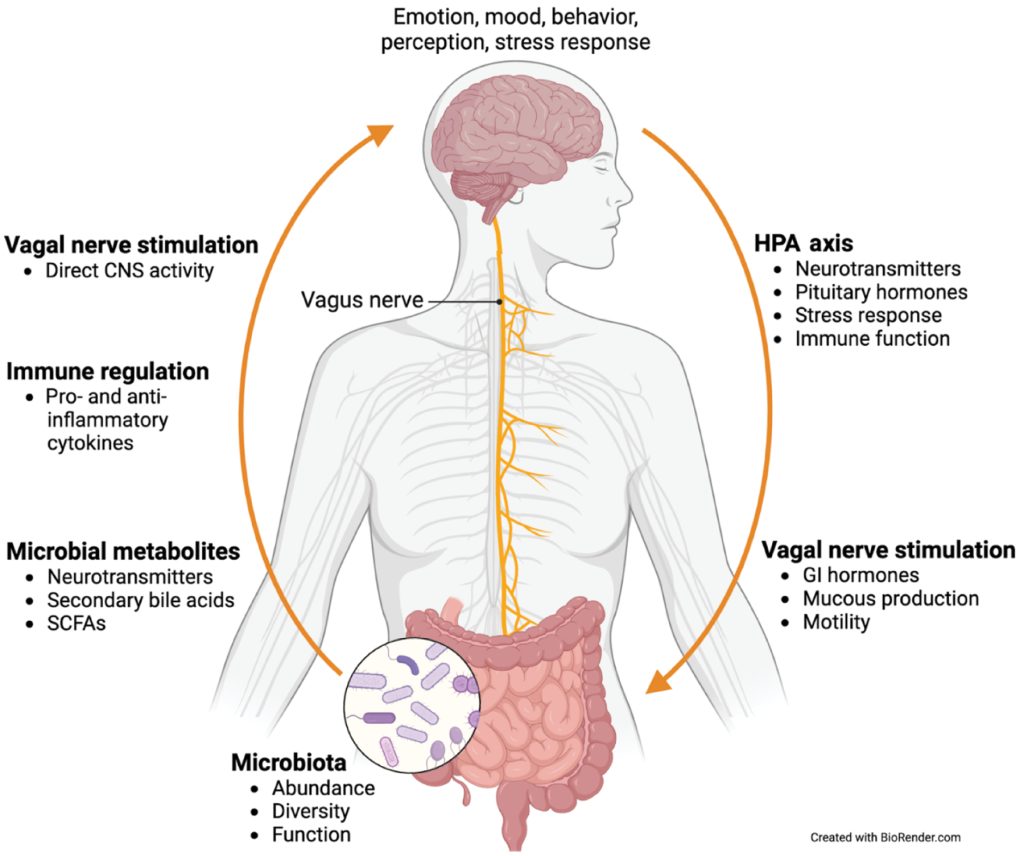
CNS, central nervous system; GI, gastrointestinal; HPA, hypothalamic–pituitary–adrenal; SCFAs, short-chain fatty acids.
Gut Microbiome and Mental Health
Mounting translational evidence supports a role for the gut microbiome in health and disease, including alterations in gut microbial abundance and function in a vast array of neuropsychiatric conditions.4,5 One of the many systemic functions attributed to the gut microbiome is its role in the gut–brain axis, which acts as a bidirectional line of communication between the gastrointestinal tract and the central nervous system (CNS). This line of communication involves the transmission of signals through both chemical (e.g., microbial metabolites, cytokines, neurotransmitters) and electrical means (e.g., autonomic and enteric nervous systems), and it is the underlying hypothesis for how gastrointestinal health is intertwined with neurological functioning.3
Gut microbiota produce numerous metabolites relevant to neuronal signaling and, subsequently, mental health. Several microbial taxa are known producers of neurotransmitters such as GABA, serotonin, dopamine, acetylcholine, histamine, and norepinephrine.6 Lactobacillus and Bifidobacterium, for example, are two probiotic taxa commonly associated with beneficial physiological outcomes when present in homeostatic conditions and are known producers of GABA.7 Lactobacillus spp. in particular produce serotonin, acetylcholine, and histamine, which impact mood states.8,9 In addition to the direct production of neurotransmitters, microbial products may also be involved in vagus nerve stimulation, which can subsequently increase hippocampal neurogenesis and modulate the release of norepinephrine, serotonin, and dopamine in brain regions related to anxiety10 (Figure 2).

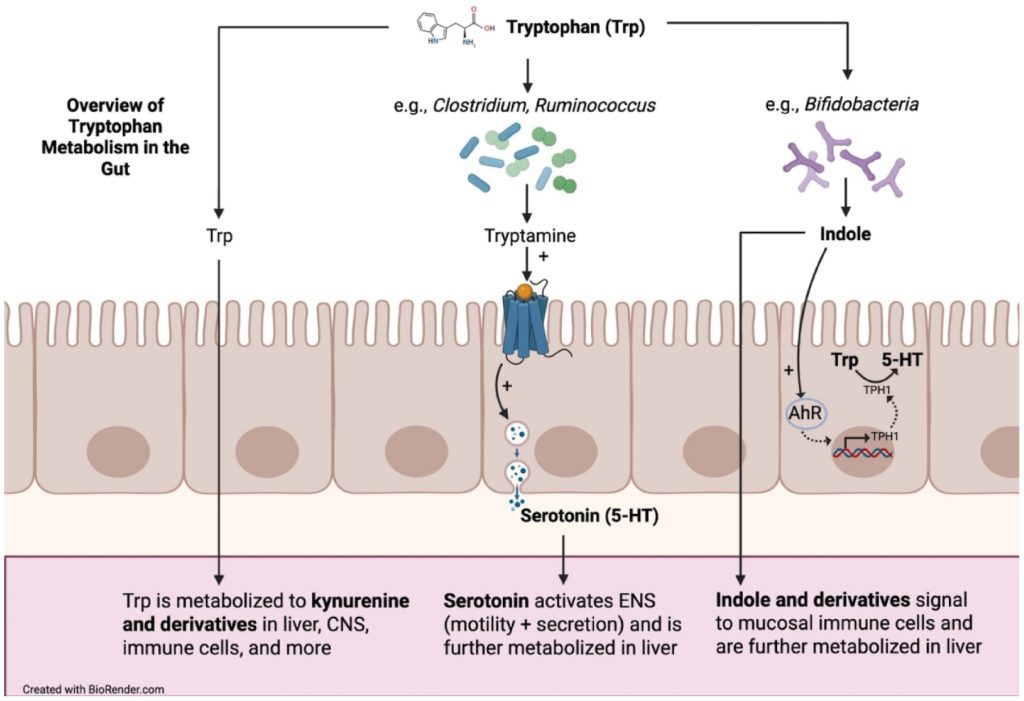
Trp entering the gut lumen is metabolized along three distinct pathways. Left: Trp is absorbed and metabolized systemically to kynurenine and its derivatives in the liver, CNS, and immune cells. Center: Luminal bacteria (e.g., Clostridium, Ruminococcus) convert Trp to tryptamine, which binds a serotonin receptor (5-HT3R, shown in blue) on the apical surface of intestinal epithelial cells, stimulating enterochromaffin cells to release 5-HT. 5-HT activates the ENS, regulating gut motility and secretion, before further hepatic metabolism. Right: Indole-producing bacteria (e.g., Bifidobacteria) convert Trp to indole and indole-derivative metabolites, which activate AhR in intestinal epithelial cells. AhR activation upregulates TPH1 expression, promoting local serotonin synthesis from Trp. Indole and its derivatives signal to mucosal immune cells and undergo further hepatic metabolism. AhR, aryl hydrocarbon receptor; CNS, central nervous system; ENS, enteric nervous system; 5-HT, serotonin (5-hydroxytryptamine); TPH1, tryptophan hydroxylase 1; Trp, tryptophan.
Metabolism of the amino acid tryptophan is another neuroregulatory mechanism impacted by gut microbiota, and evidence suggests that dysregulation in tryptophan degradation pathways (e.g., the kynurenine, indole, and serotonin pathways) can be linked to a variety of psychological disorders.11 The indole pathway, which produces a family of biologically active compounds sharing the bicyclic indole ring, is distinct from the parent molecule indole itself. The production of indole metabolites, for example, is regulated by taxa such as Lactobacillus, Bifidobacterium, Bacteroides, Clostridium, and others.12 The bioactivity of indole metabolites has been linked to cognitive health, regulation of mood and behavior, and immunomodulation.12 Serotonin, another metabolite of tryptophan metabolism and a neurotransmitter involved in mood, behavior, and memory, is produced by taxa such as Lactobacillus, Lactococcus, and others.9
While both neurotoxic and neuroprotective kynurenine metabolites are primarily produced by human cells,13,14 their production can be regulated by microbial metabolites, such as short-chain fatty acids (SCFAs), and the presence of bacterial components, such as lipopolysaccharides (LPS). Butyrate, one SCFA produced by microbial fiber fermentation, inhibits the activity of indoleamine 2,3-dioxygenase 1 (IDO1).15 IDO1 is an enzyme responsible for the transformation of tryptophan to kynurenine and thus is the initial regulatory step for tryptophan metabolism down the kynurenine pathway.16 Additionally, immunogenic bacterial components such as LPS can trigger toll-like receptor signaling cascades, which crosstalk with tryptophan metabolic pathways.17 Tryptophan metabolites of all three pathways are activators of the aryl hydrocarbon receptor, which can influence CNS activity by promoting microglial and astrocyte activation and regulating inflammatory responses.18
In addition, the gut microbiome regulates local and systemic immune function, which can impact CNS activities and mental health through several mechanisms. Certain microbiota, for example, impact systemic exposure to inflammatory signals by producing metabolites (e.g., SCFAs and secondary bile acids) that regulate immune responses19 and support intestinal barrier integrity.20,21 The role of the microbiome in immune homeostasis is highly relevant to mental health, as several studies have noted increased concentrations of inflammatory mediators, such as cytokines and acute phase reactants, in patients with mood disorders (e.g., depression, bipolar, and anxiety disorders).22,23 Some inflammatory cytokines (e.g., interleukin [IL]-1 beta, IL-6, and tumor necrosis factor [TNF]-alpha) can directly interact with cells of the CNS by crossing the blood–brain barrier24,25 and impact signaling in areas of the brain involved in reward and emotional regulation.26
Inflammatory mediators can also indirectly affect CNS activity by altering neurotransmitter metabolism and hypothalamic–pituitary axis signaling. Cytokine signaling, for example, may increase tryptophan metabolism through the kynurenine pathway by promoting IDO1 expression, resulting in decreased metabolism of serotonin or indole pathways.27,28 Not only does this result in decreased synthesis of serotonin and indole metabolites, but evidence also suggests that this cytokine-mediated dysregulation in tryptophan metabolism is associated with a decreased ratio of neuroprotective to neurotoxic kynurenine metabolites.28,29 Finally, literature also shows that the hypothalamic–pituitary–adrenal axis (HPA), which serves as a link between perceived and physiological responses to stress, becomes dysregulated in the presence of higher levels of cortisol and inflammatory mediators, and that alterations in gut microbiota impact these levels.30,31
Anxiety Disorders
Anxiety disorders are characterized by excessive worry, fear, or anxiety about everyday situations that can interfere with daily activities and last at least 6 months.32 Common anxiety disorders include generalized anxiety disorder, panic disorder, social anxiety disorder (social phobia), specific phobias, and separation anxiety disorder.33 Signs and symptoms can vary depending on the disorder but generally include excessive worry, restlessness, fatigue, difficulty concentrating, irritability, muscle tension, and sleep disturbances.34 Anxiety disorders involve several key brain regions and neurotransmitter pathways, including increased amygdala activity, leading to heightened responses, activated hypothalamic responses, and serotonin and GABA imbalances.35 Diagnosis typically involves a psychiatric evaluation, including a detailed discussion of symptoms, severity, and how they impact daily life. The Diagnostic and Statistical Manual of Mental Disorders (DSM-5) criteria are often used.32 Common treatments for anxiety disorders include cognitive-behavioral therapy (CBT) or exposure therapy; antidepressants, such as selective serotonin reuptake inhibitors (SSRIs) or serotonin and norepinephrine reuptake inhibitors (SNRIs); benzodiazepines; lifestyle modifications, such as exercise, nutrition optimization, reduced caffeine intake, and improved sleep hygiene; and alternative therapies, such as yoga, meditation, acupuncture, herbal, and nutritional medicine.36,37 Conventional pharmacological treatments can come with many unwanted side effects, such as nausea, diarrhea or constipation, insomnia, sexual dysfunction, weight gain, dizziness, and agitation.38 For this reason and because of the emerging understanding of the gut’s influence on mental health, alternative treatments are becoming more sought after.
Many studies have demonstrated a connection between anxiety disorders and the gut microbiome via the microbiota–gut–brain axis, which consists of multiple bidirectional pathways, including the vagus nerve, the immune system, and bacterial metabolites.39
Bacterial species regulate the production of neurotransmitters, such as GABA, serotonin, and tryptophan, and upregulate the production of SCFAs and brain-derived neurotrophic factor (BDNF), which influence the modulation of anxiety and panic disorders.9,40
Probiotic Interventions for Anxiety and Depression
Many studies have been conducted to demonstrate the utility of certain probiotic strains in the modulation of mental health disorders, specifically anxiety and depression.41,42 Tables 1 and 2 summarize the most relevant probiotic strains, doses, and substrates found in the literature to have a beneficial effect on alleviating symptoms of both anxiety and depression.
| Probiotic | Dose | Bacteria food/substrate | Biochemical results | Clinical results | References |
|---|---|---|---|---|---|
| B. animalis subsp. lactis BB-12 | Not specified | Not specified | Increased abundance of Bifidobacteriaceae | Improved cognitive state anxiety, somatic state anxiety, and anxiety emotion | Dong et al. (2021)43 |
| L. casei Shirota strain | Not specified | Fermented milk | Decreased salivary cortisol | Improved stress-associated abdominal dysfunction | Kato-Kataoka et al. (2016)42 |
| L. casei Shirota strain | 3×10¹⁰ CFU | Mixed with orange juice | May influence the regulation of neuro-endocrine pathways and mechanism of action in response to stress | Decreased anxiety symptoms and improved aerobic capacity | Salleh et al. (2021)44 |
| L. plantarum (CECT7484, CECT7485), P. acidilactici | Not specified | Not specified | IBS-QoL increased significantly in treatment vs placebo group | Improved gut-specific anxiety | Lorenzo-Zúñiga et al. (2014)45 |
| L. plantarum DR7 | 1×10⁹ CFU/day ×12 weeks | Not specified | Decreased plasma cortisol, IFN-γ, TNF-α; increased IL-10 | Improved attention, emotional cognition, and associative learning | Chong et al. (2019)39 |
| L. plantarum JYLP-326 | BID×3 weeks | Isolated from fermented sticky rice | Decreased levels of ethyl sulfate and increased cyclohexylamine | Relieved symptoms of anxiety, depression, and insomnia | Zhu et al. (2023)46 |
| L. plantarum P-8 | QD×12 weeks | Not specified | Decreased plasma levels of IFN-γ, TNF-α, and cortisol | Decreased stress- and anxiety-related symptoms | Lew et al. (2019)47 |
| L. rhamnosus HN001 | Not specified | Not specified | Mediated GABA receptor expression | Decreased rates of anxiety in postpartum women | Slykerman et al. (2017)48 |
| NVP-1704 (L. reuteri NK33 and B. adolescentis NK98) | Not specified | Freeze-dried capsule with maltodextrin | Significant reduction in serum IL-6 levels | Reduction in anxiety symptoms | Lee et al. (2021)49 |
| Probiotic | Dose | Bacteria food/substrate | Biochemical result | Clinical results | References |
|---|---|---|---|---|---|
| L. plantarum P-8 | QD×12 weeks | Not specified | Decreased plasma levels of IFN-γ, TNF-α, and cortisol | Decreased stress- and anxiety-related symptoms | Lew et al. (2019)47 |
| L. plantarum JYLP-326 | BID×3 weeks | Isolated from fermented sticky rice | Reversal of higher ethyl sulfate and lower cyclohexylamine levels | Changed microbiota and fecal metabolites associated with anxiety | Chong et al. (2019)50 |
| L. plantarum DR7 | 1×10⁹ CFU/day ×12 weeks | Not specified | Decreased plasma cortisol, IFN-γ, and TGF-α; increased IL-10 | Reduced stress, anxiety, and total psychological scores | Chong et al. (2019)39 |
| L. casei Shirota | Not specified | Fermented drink | Lower salivary cortisol and plasma L-tryptophan; higher fecal serotonin levels | Fewer abdominal and cold symptoms | Kato-Kataoka et al. (2016)42 |
| L. casei Shirota | 3×10¹⁰ CFU | Mixed with orange juice | May influence the regulation of neuro-endocrine pathways and the mechanism of action in response to stress | Decreased anxiety symptoms and improved aerobic capacity | Salleh et al. (2021)44 |
| Not specified | Not specified | Not specified | CFU level was more effective than species counts | Improved panic, neurophysiological anxiety, negative affect, worry, and mood regulation | Tran et al. (2019)51 |
| L. rhamnosus HN001 | Not specified | Not specified | Mediated GABA receptor expression | Decreased rates of anxiety in postpartum women | Slykerman et al. (2017)48 |
| NVP-1704 (L. reuteri NK33 and B. adolescentis NK98) | Not specified | Freeze-dried capsule with maltodextrin | Significant reduction in serum IL-6 levels | Reduction in anxiety symptoms | Lee et al. (2021)49 |
| L. Casei Shirota | 3×10¹⁰ CFU | Mixed with orange juice | Modulated theta and delta brain waves | Improved training, brain function, and psychological improvement through exercise | Adikari et al. (2020)52 |
| B. animalis subsp. lactis BB-12 | Not specified | Not specified | Increased the abundance of Bifidobacteriaceae | Improved cognitive state anxiety, somatic state anxiety, and anxiety emotion | Dong et al. (2021)43 |
| L. plantarum (CECT7484 and CECT7485), P. acidilactici | Not specified | Not specified | IBS-QoL increased significantly in treatment vs placebo group | Improved gut-specific anxiety | Lorenzo-Zúñiga et al. (2014)45 |
Major Depressive Disorder
Major depressive disorder (MDD) is a prevalent and debilitating mood disorder, characterized by persistent feelings of sadness, hopelessness, and anhedonia, which significantly impair functioning in work, social, and academic settings.53 The diagnostic criteria for MDD, as outlined in the DSM-5, require the presence of these symptoms for a minimum duration of 2 weeks. Common symptoms include depressed mood, feelings of worthlessness or excessive guilt, cognitive impairments (such as difficulty concentrating), disturbances in appetite or weight (either weight loss or gain), sleep disturbances (insomnia or hypersomnia), and low energy or fatigue. Additionally, individuals may experience physical symptoms such as unexplained somatic pain or gastrointestinal disturbances, and, in severe cases, thoughts of death or suicide.
The pathophysiology of depression is multifactorial, involving alterations in brain structure and function, particularly within the prefrontal cortex, amygdala, and hippocampus—regions implicated in mood regulation, emotional processing, and memory. Neurochemical imbalances in key neurotransmitters, including serotonin, norepinephrine, and dopamine, are central to the development of depressive symptoms.54 Recent research also highlights the roles of neuroinflammation, changes in neuroplasticity, and disruptions to the gastrointestinal microbiome in the pathophysiological mechanisms underlying depression.55
The diagnosis of MDD typically involves a comprehensive psychiatric evaluation, with severity, symptom duration, and functional impairment assessed according to DSM-5 criteria.
Treatment strategies for MDD often combine psychotherapy and pharmacotherapy. CBT and interpersonal therapy are the most commonly utilized psychotherapeutic approaches, focusing on identifying and modifying negative thought patterns and improving interpersonal relationships. Pharmacologically, SSRIs and SNRIs are frequently prescribed to increase the availability of serotonin and norepinephrine in the brain.53 Less end>commonly used options, such as tricyclic antidepressants and monoamine oxidase inhibitors, are limited by significant side effects and dietary restrictions. For patients who do not respond to these medications or who experience intolerable side effects, alternative treatments, including electroconvulsive therapy, transcranial magnetic stimulation, vagus nerve stimulation, and ketamine or esketamine therapy, may be considered.53
In addition to pharmacological and psychotherapeutic interventions, lifestyle modifications, including exercise, mindfulness-based stress reduction, and yoga, have shown efficacy in improving mood and overall well-being.
Although antidepressants are effective for many individuals, they are associated with potential side effects, including sexual dysfunction, weight gain, gastrointestinal disturbances, and sleep disturbances. Psychiatric side effects, such as agitation, emotional numbness, or increased suicidal ideation, may also occur, particularly during the initial stages of treatment or in younger populations. As the role of the gut microbiome in mental health becomes more recognized, alternative treatments targeting the gastrointestinal microbiome are gaining increasing interest as adjuncts to conventional therapies.
Researchers often measure anxiety and depression in the same study, reflected in the significant overlap between Tables 1 and 2. Clinically, however, they are separate diagnostic categories. Therefore, we have chosen to keep them separate.
Bipolar Disorder
Bipolar disorder (BD), formerly known as manic-depressive disorder, is a mood disorder characterized by extreme fluctuations in mood, energy, and activity levels, typically involving episodes of mania or hypomania followed by depression.56 These mood episodes significantly impair an individual’s ability to function in daily life, including in social, academic, and occupational settings. The diagnostic criteria for BD, as outlined in the DSM-5, require the presence of distinct manic, hypomanic, or depressive episodes, with symptoms lasting for at least 4 days (hypomania) or 1 week (mania) and impairing social or occupational functioning. Common symptoms during manic episodes include elevated or irritable mood, increased energy, impulsivity, grandiosity, decreased need for sleep, and racing thoughts, while feelings of hopelessness, anhedonia, fatigue, changes in appetite or sleep, and suicidal thoughts characterize depressive episodes.
The pathophysiology of BD involves complex interactions between genetic, neurobiological, and environmental factors. Structural and functional abnormalities have been observed in brain regions such as the prefrontal cortex, amygdala, and ventral striatum, which are involved in mood regulation, reward processing, and decision-making.57 Neurochemical imbalances, particularly in dopamine, serotonin, and glutamate systems, play a key role in the onset of mood episodes. Moreover, disturbances in circadian rhythms and neuroplasticity are increasingly recognized as contributing factors to the disorder’s course and severity.58
BD is typically diagnosed through clinical evaluation, with a focus on identifying the duration, severity, and impact of manic, hypomanic, and depressive episodes. The DSM-5 criteria, along with mood charting, are used to assess symptom patterns and diagnose the disorder accurately.
Treatment for BD often involves a combination of mood stabilizers, antipsychotic medications, and psychotherapy. Lithium and valproate are among the most commonly prescribed mood stabilizers, while atypical antipsychotics, such as quetiapine and olanzapine, are used to manage manic or mixed episodes.59 Antidepressants may be used cautiously during depressive episodes, often in combination with a mood stabilizer, to prevent the induction of mania. Psychotherapeutic interventions, such as CBT and interpersonal and social rhythm therapy, aim to improve mood regulation, adherence to medication, and coping strategies for managing the disorder.60
In addition to pharmacological and psychotherapeutic approaches, lifestyle interventions are critical to managing BD. Regular sleep patterns, exercise, stress management, and psychoeducation play key roles in stabilizing mood and reducing the frequency and severity of episodes.61
Despite the efficacy of current treatments, side effects of medications, such as weight gain, sedation, and tremors, may limit adherence and quality of life. Furthermore, suicidal ideation and psychotic features may complicate treatment, particularly during depressive or manic episodes.62 As a result, alternative and adjunctive treatments, including targeting probiotic supplementation, are under investigation.
Numerous studies have investigated the potential of specific probiotic strains to modulate mental health disorders, particularly BD and schizophrenia. Table 3 provides a summary of the most relevant probiotic strains, dosages, and substrates identified in the literature as having a beneficial effect on alleviating symptoms of both BD and schizophrenia.
| Probiotic | Dose | Bacteria food/substrate | Biochemical result | Clinical results | References |
|---|---|---|---|---|---|
| B. breve A-1 | 1011 CFU/day×4 weeks | Not specified | Higher levels of Parabacteroides in the gut | Reduction in anxiety and depression; fewer negative symptoms | Zhu et al. (2023)46 |
| L. acidophilus, B. bifidum, L. reuteri, and L. fermentum | 109 CFU×8/day ×12 weeks | Not specified | Increased total antioxidant capacity and decreased malondialdehyde, CRP, fasting plasma glucose, insulin concentrations, insulin resistance, TG, total cholesterol levels, and total/HDL cholesterol ratio | Improved PANSS scores | Pourzaki et al. (2019)63 |
| L. paracasei Shirota | 1010 CFU×8/day | Not specified | Higher counts of Bifidobacterium and Atopobium clusters | Improvement in depressive symptoms and sleep | Messaoudi et al. (2021)64 |
Schizophrenia
Schizophrenia is a chronic and severe neurodevelopmental disorder characterized by a range of positive, negative, and cognitive symptoms that impair an individual’s ability to function in daily life. These symptoms often include hallucinations (perceptions without external stimuli, such as hearing voices), delusions (false beliefs, such as believing one is being persecuted or controlled), disorganized thinking, and disorganized or abnormal motor behavior. Negative symptoms, such as diminished emotional expression, avolition (lack of motivation), and social withdrawal, often lead to significant impairments in social, academic, and occupational functioning. Cognitive symptoms, including difficulties with attention, memory, and executive functioning, further complicate the disorder’s course.63
The pathophysiology of schizophrenia is multifactorial, involving complex interactions between genetic, neurobiological, and environmental factors. Structural abnormalities in the brain, such as enlargement of the ventricles, reduced gray matter, and abnormalities in the prefrontal cortex, hippocampus, and thalamus, have been consistently observed in individuals with schizophrenia. Neurochemical imbalances, particularly involving dopamine, glutamate, and serotonin systems, are central to the manifestation of psychotic symptoms. Dopamine dysregulation, in particular, is believed to contribute to the positive symptoms of schizophrenia, while N-methyl-d-aspartate receptor hypofunction may play a role in cognitive and negative symptoms.64 Neuroinflammation and neurodevelopmental disruptions are increasingly recognized as contributing to the disorder’s pathogenesis.
Schizophrenia is diagnosed through clinical evaluation, with emphasis placed on the presence of characteristic symptoms over a significant period (usually 6 months or more). The DSM-5 criteria, in conjunction with comprehensive psychiatric assessments, guide the diagnosis by categorizing symptoms as positive, negative, or cognitive and by assessing their impact on functioning.
Treatment for schizophrenia generally involves a combination of antipsychotic medications and psychosocial interventions. The primary treatment approach consists of antipsychotic medications, including second-generation antipsychotics (e.g., risperidone, olanzapine, aripiprazole) and first-generation antipsychotics (e.g., haloperidol), which target dopamine and other neurotransmitter systems to reduce positive symptoms. CBT, family therapy, and social skills training are effective psychotherapeutic interventions that focus on symptom management, improving functional outcomes, and enhancing adherence to medication regimens.56
In addition to pharmacological and psychosocial treatments, psychoeducation, rehabilitation, and community support programs play essential roles in helping individuals with schizophrenia integrate into society and manage daily challenges.
Although antipsychotic medications are effective in reducing symptoms, they are associated with a range of side effects, including weight gain, sedation, extrapyramidal symptoms, and metabolic disturbances.65 These side effects can significantly affect patient adherence to treatment. In addition, the persistence of negative symptoms and cognitive dysfunction can hinder overall recovery, and there is a need for more targeted treatments addressing these domains. As research progresses, emerging interventions, such as the administration of specific probiotic strains to modify the gastrointestinal ecosystem, show promising potential benefits.
Results
Several key mechanisms are proposed to explain how probiotics may contribute to improved mental health outcomes. These mechanisms include modulation of neurotransmitter production, regulation of the immune response, reduction of systemic inflammation, SCFA production, and improvement of gut barrier function.3
The studies summarized in Tables 1–3 provide evidence of the microbiome’s role in regulating mental health, particularly in alleviating symptoms of anxiety, depression, and schizophrenia. These effects are mediated through several key mechanisms, including neurotransmitter modulation, immune response regulation, inflammation reduction, SCFA production, gut barrier enhancement, HPA axis regulation, and hormonal modulation. This discussion integrates these findings and highlights the differential effects of microbiome interventions across these psychiatric disorders.
One of the primary mechanisms through which probiotics influence mental health is neurotransmitter modulation. Strains such as L. rhamnosus HN001 mediated GABA receptor expression in the CNS and vagus nerve, leading to reduced anxiety in postpartum women.48 Similarly, L. plantarum JYLP-326 altered fecal metabolites such as ethyl sulfate and cyclohexylamine, which were associated with decreased test anxiety.46 L. casei Shirota further demonstrated serotonergic modulation by increasing fecal serotonin levels and improving anxiety symptoms.66 Strains such as L. plantarum DR7 and L. casei Shirota enhanced neurotransmitter balance, leading to improved cognitive functions and decreased symptoms of depression.50,52 In schizophrenia, L. acidophilus and B. bifidum improved Positive and Negative Syndrome Scale (PANSS) scores, and B. breve correlated with fewer negative symptoms, highlighting the role of neurotransmitter pathways in psychotic symptom relief.67
The gut microbiome also plays a central role in immune system modulation, a key pathway in mental health regulation. Probiotics such as L. plantarum DR7 increased anti-inflammatory cytokine IL-10 and decreased pro-inflammatory markers such as interferon (IFN)-γ and TGF-α, alleviating anxiety symptoms.39 Similarly, NVP-1704 reduced IL-6, providing systemic inflammation relief and lowering anxiety. In depression, L. plantarum DR7 and P-8 showed similar cytokine modulation, with reductions in IFN-γ and TNF-α and increases in IL-10 correlating with psychological improvements.39 Studies on schizophrenia also demonstrated immune regulation benefits, with L. rhamnosus GG and B. animalis BB12 increasing MCP-1 and BDNF, promoting neuroprotection.50 Additionally, B. bifidum and L. acidophilus reduced YMRS and HDRS scores, highlighting the importance of immune modulation in improving psychotic and depressive symptoms.68
Systemic inflammation, a recognized factor in the pathophysiology of mental health disorders, is another key target of probiotics. L. plantarum DR7 and P-8 significantly reduced cortisol and pro-inflammatory cytokines such as IFN-γ and TNF-α, leading to decreased anxiety symptoms.39 Similarly, NVP-1704 reduced serum IL-6 levels, showing a direct link between inflammation reduction and anxiety relief.49 In depression, L. reuteri NK33 and B. adolescentis NK98 reduced systemic inflammation, improving depressive symptoms early in treatment.49 Schizophrenia studies also revealed that L. acidophilus and B. bifidum reduced pro-inflammatory markers, correlating with improved psychotic and depressive scores.67 Lactobacillus strains demonstrated negative correlations with cortisol, indicating systemic inflammation reduction and its role in mitigating schizophrenia symptoms.69
SCFA production, while not directly measured in most studies, plays a critical role in gut–brain communication. SCFAs, including butyrate, propionate, and acetate, influence inflammation, neurotransmitter synthesis, and gut barrier function.70 Improvements in gut-specific symptoms with L. plantarum strains, such as CECT7484 and CECT7485, suggest enhanced SCFA-mediated signaling, reducing gut–brain communication dysfunction.71 Additionally, L. casei Shirota’s effects on serotonin and cognition may be partly attributed to SCFA production, reinforcing its impact on mental health.66 Enhanced gut barrier function is another significant outcome of probiotic interventions. L. plantarum strains improved gut-specific anxiety and IBS quality-of-life scores, reflecting stronger gut barrier integrity.71 L. casei Shirota reduced stress and depression-related physical symptoms, further linking improved gut integrity to psychological benefits.42 In schizophrenia, probiotics combined with dietary fiber (Bifico) reduced weight gain and body mass index, indirectly indicating enhanced gut barrier function during antipsychotic therapy.72
The HPA axis, a critical mediator of stress responses, was modulated by probiotics across all conditions. In anxiety, L. casei Shirota and L. plantarum DR7 reduced cortisol levels, reflecting improved stress regulation.39,66 L. rhamnosus HN001 further regulated the HPA axis via vagus nerve signaling, improving postpartum anxiety.48 In depression, L. plantarum DR7 and P-8 reduced cortisol levels, correlating with mood and cognitive enhancements.39 Probiotic combinations in schizophrenia studies reduced stress markers, suggesting indirect HPA axis stabilization.
Hormonal regulation, particularly of cortisol, emerged as a consistent benefit of probiotics. In anxiety, L. plantarum DR7 and L. casei Shirota reduced cortisol levels, linking hormonal balance to symptom relief.39,66 For depression, L. plantarum P-8 and DR7 reduced cortisol, leading to psychological improvements.39 In schizophrenia, cortisol regulation correlated with reduced hospitalizations and improved psychotic symptoms, highlighting hormonal modulation as a critical therapeutic pathway.73
Discussion
These findings suggest that probiotic interventions exert meaningful effects across a range of psychiatric conditions, though the nature and magnitude of those effects vary in ways that are themselves informative. Rather than representing isolated successes of individual strains, the evidence begins to reveal a pattern in which shared gut–brain mechanisms underlie symptom improvement across diagnostically distinct disorders, with neurotransmitter modulation, immune regulation, and HPA axis stabilization emerging as consistent mechanisms across anxiety, depression, and schizophrenia alike. This is consistent with the broad literature on the gut–brain axis, in which microbial metabolites and immune signals converge on overlapping neurological targets regardless of diagnostic category.3
However, the specific pathways most prominently engaged appear to differ by disorder in ways that parallel their known neurobiological profiles. GABA-mediated effects were most evident in anxiety presentations, consistent with the well-established role of GABAergic dysregulation in anxiety pathophysiology,35 while serotonergic modulation featured more heavily in depression outcomes, reflecting the centrality of serotonin signaling in mood regulation.54 In schizophrenia, improvements in PANSS scores and negative symptom burden correlated most strongly with immune and inflammatory markers, which aligns with growing recognition of neuroinflammation as a core feature of psychotic disorders.64 These distinctions suggest that the gut–brain axis does not operate uniformly across psychiatric conditions and that mechanistic specificity may be as important as strain selection in understanding probiotic efficacy.
The differential mechanistic profile observed across disorders raises important questions about patient selection. If probiotic efficacy is partly mediated through inflammatory pathways, individuals with elevated baseline inflammatory markers, including subgroups that have been identified within depression and schizophrenia populations,22,23 may represent a particularly responsive target. Similarly, if serotonergic modulation is a key mechanism in depression, individuals with documented disruptions in tryptophan metabolism or gut microbial serotonin production may derive greater benefit than those whose depressive presentation is driven primarily by other pathways.
The evidence reviewed here supports a cautious but meaningful role for psychobiotic interventions as adjuncts to conventional psychiatric treatment. Probiotic supplementation is generally well tolerated, carries a favorable safety profile relative to many pharmacological options, and addresses mechanisms that are not directly targeted by most first-line psychiatric medications, including gut barrier dysfunction, systemic inflammation, and HPA axis dysregulation. For clinicians working with patients who experience partial response to conventional treatments or who are seeking to minimize pharmacological burden, microbiome-targeted interventions represent a reasonable area of clinical consideration, provided that expectations are calibrated to the current state of the evidence.
Limitations and Future Directions
While evidence supports microbiome-based strategies for managing psychiatric disorders, several limitations hinder generalizability and reproducibility. Chief among these is the heterogeneity across studies, in participant populations, outcome measures, treatment durations, and especially in the strains, combinations, and doses of probiotics used. Few trials employ standardized microbial compositions, making comparisons difficult and limiting clinical translation. Additionally, many studies report probiotic doses at manufacture, not ingestion, despite known degradation over time. One study from Sweden, for example, recommends rotating strains every 4 months to preserve efficacy, highlighting the need for real-world dosing strategies.
Another challenge is the lack of consistency in substrates and delivery methods. Probiotic efficacy depends not only on microbial strains but also on the surrounding dietary environment, which affects activity and metabolite production. Yet, these factors are rarely controlled or reported. Moreover, most studies use unique strain combinations that rarely match commercially available products, making clinical replication difficult.
Emerging research into postbiotics, therapies based on microbial metabolites rather than live organisms, may offer a more stable and targeted approach. For individuals lacking specific microbial functions critical to neurotransmitter synthesis or immune modulation, direct supplementation with key metabolites may be more effective than relying on colonization.
Future research should prioritize standardized protocols, validated dosing, and transparent reporting of substrates and viability. Functional profiling of patient microbiomes may help identify missing pathways and guide personalized interventions. Long-term, longitudinal studies integrating microbiome-based and conventional therapies will be essential to assess therapeutic potential, safety, and durability. Addressing these gaps is critical to advancing microbiome science as a cornerstone of personalized mental health care.
Conclusion
This narrative review underscores the important clinical role of the gut microbiome in modulating mental health in patients who experience disruptions in neurotransmitter production, immune response regulation, inflammation reduction, SCFA production, gut barrier function, HPA axis modulation, and hormonal regulation. Across anxiety, depression, and schizophrenia, the evidence highlights the therapeutic potential of various probiotic strains in improving clinical outcomes.
Key findings include the ability of probiotics to influence neurotransmitter pathways, reduce systemic inflammation, and restore immune balance, hallmarks of gut–brain axis dysfunction observed in these mental health disorders. Enhanced SCFA production and gut barrier integrity underscore the microbiome’s capacity to mediate systemic and neurological health. Moreover, modulation of the HPA axis and cortisol levels provides a direct link between microbiota interventions and stress regulation.
Ultimately, the convergence of neurotransmitter modulation, immune regulation, and HPA axis stabilization across diagnostically distinct conditions suggests that microbiome-based interventions engage fundamental pathways of brain health that transcend traditional diagnostic boundaries, an insight with meaningful implications for how mental health conditions are understood and treated. As research methodology matures and personalized approaches to microbiome assessment become more accessible, psychobiotic interventions hold genuine promise as adjuncts to conventional care, particularly for individuals with treatment-resistant presentations or elevated inflammatory burden.
Competing Interests
The authors declare that they have no competing interests.
Authors' Contributions
AT: conceptualization, methodology, writing; LM: conceptualization, methodology, writing; AV: writing, visualization; RH: visualization; HZ: conceptualization, methodology, writing—review & editing; JM: Visualization, writing—review & editing.
Funding
Dr. Zwickey was supported by NIH grants: NCCIH R90AT008924, NCCIH U24AT012549, and NIDDK R25DK130848.
References
- Hashimoto K. Emerging role of the host microbiome in neuropsychiatric disorders: overview and future directions. Mol Psychiatry. 2023;28(9):3625–37. https://doi.org/10.1038/s41380-023-02287-6.
- Sorboni SG, Moghaddam HS, Jafarzadeh-Esfehani R, Soleimanpour S. A comprehensive review on the role of the gut microbiome in human neurological disorders. Clin Microbiol Rev. 2022;35(1):e0033820. https://doi.org/10.1128/CMR.00338-20.
- Cryan JF, O’Riordan KJ, Cowan CSM, et al. The microbiota-gut-brain axis. Physiol Rev. 2019;99(4):1877–2013. https://doi.org/10.1152/physrev.00018.2018.
- Grau-Del Valle C, Fernández J, Solá E, et al. Association between gut microbiota and psychiatric disorders: a systematic review. Front Psychol. 2023;14:1215674. https://doi.org/10.3389/fpsyg.2023.1215674.
- Socała K, Doboszewska U, Szopa A, et al. The role of microbiota-gut-brain axis in neuropsychiatric and neurological disorders. Pharmacol Res. 2021;172:105840. https://doi.org/10.1016/j.phrs.2021.105840.
- Chen Y, Xu J, Chen Y. Regulation of neurotransmitters by the gut microbiota and effects on cognition in neurological disorders. Nutrients. 2021;13(6):2099. https://doi.org/10.3390/nu13062099.
- Barrett E, Ross RP, O’Toole PW, et al. γ-Aminobutyric acid production by culturable bacteria from the human intestine. J Appl Microbiol. 2012;113(2):411–7. https://doi.org/10.1111/j.1365-2672.2012.05344.x.
- Clarke G, Stilling RM, Kennedy PJ, et al. Minireview: gut microbiota: the neglected endocrine organ. Mol Endocrinol Baltim Md. 2014;28(8):1221–38. https://doi.org/10.1210/me.2014-1108.
- Strandwitz P. Neurotransmitter modulation by the gut microbiota. Brain Res. 2018;1693(Pt B):128–33. https://doi.org/10.1016/j.brainres.2018.03.015.
- Breit S, Kupferberg A, Rogler G, Hasler G. Vagus nerve as modulator of the brain-gut axis in psychiatric and inflammatory disorders. Front Psychiatry. 2018;9:44. https://doi.org/10.3389/fpsyt.2018.00044.
- Davidson M, Rashidi N, Nurgali K, Apostolopoulos V. The role of tryptophan metabolites in neuropsychiatric disorders. Int J Mol Sci. 2022;23(17):9968. https://doi.org/10.3390/ijms23179968.
- Zhou Y, Chen Y, He H, et al. The role of the indoles in microbiota-gut-brain axis and potential therapeutic targets: a focus on human neurological and neuropsychiatric diseases. Neuropharmacology. 2023;239:109690. https://doi.org/10.1016/j.neuropharm.2023.109690.
- Badawy AAB. Kynurenine Pathway of tryptophan metabolism: regulatory and functional aspects. Int J Tryptophan Res IJTR. 2017;10:1178646917691938. https://doi.org/10.1177/1178646917691938.
- Pathak S, Nadar R, Kim S, et al. The influence of kynurenine metabolites on neurodegenerative pathologies. Int J Mol Sci. 2024;25(2):853. https://doi.org/10.3390/ijms25020853.
- Martin-Gallausiaux C, Larraufie P, Jarry A, et al. Butyrate produced by commensal bacteria down-regulates indolamine 2,3-dioxygenase 1 (IDO-1) expression via a dual mechanism in human intestinal epithelial cells. Front Immunol. 2018;9:2838. https://doi.org/10.3389/fimmu.2018.02838.
- Pallotta MT, Rossini S, Suvieri C, et al. Indoleamine 2,3-dioxygenase 1 (IDO1): an up-to-date overview of an eclectic immunoregulatory enzyme. FEBS J. 2022;289(20):6099-6118. https://doi.org/10.1111/febs.16086.
- Orhan F, Bhat M, Sandberg K, et al. Tryptophan metabolism along the kynurenine pathway downstream of toll-like receptor stimulation in peripheral monocytes. Scand J Immunol. 2016;84(5):262–71. https://doi.org/10.1111/sji.12479.
- Rothhammer V, Borucki DM, Tjon EC, et al. Microglial control of astrocytes in response to microbial metabolites. Nature. 2018;557(7707):724–28. https://doi.org/10.1038/s41586-018-0119-x.
- Yoon JH, Do JS, Velankanni P, et al. Gut microbial metabolites on host immune responses in health and disease. Immune Netw. 2023;23(1):e6. https://doi.org/10.4110/in.2023.23.e6.
- Khan I, Bai Y, Zha L, et al. Mechanism of the gut microbiota colonization resistance and enteric pathogen infection. Front Cell Infect Microbiol. 2021;11:716299. https://doi.org/10.3389/fcimb.2021.716299.
- Schreiber F, Balas I, Robinson MJ, Bakdash G. Border control: the role of the microbiome in regulating epithelial barrier function. Cells. 2024;13(6):477. https://doi.org/10.3390/cells13060477.
- Kuring JK, Mathias JL, Ward L, Tachas G. Inflammatory markers in persons with clinically-significant depression, anxiety or PTSD: a systematic review and meta-analysis. J Psychiatr Res. 2023;168:279–92. https://doi.org/10.1016/j.jpsychires.2023.10.009.
- Solmi M, Suresh Sharma M, Osimo EF, et al. Peripheral levels of C-reactive protein, tumor necrosis factor-α, interleukin-6, and interleukin-1β across the mood spectrum in bipolar disorder: a meta-analysis of mean differences and variability. Brain Behav Immun. 2021;97:193–203. https://doi.org/10.1016/j.bbi.2021.07.014.
- Yarlagadda A, Alfson E, Clayton AH. The blood brain barrier and the role of cytokines in neuropsychiatry. Psychiatry (Edgmont). 2009;6(11):18–22.
- Yang J, Ran M, Li H, et al. New insight into neurological degeneration: inflammatory cytokines and blood–brain barrier. Front Mol Neurosci. 2022;15:1013933. https://doi.org/10.3389/fnmol.2022.1013933.
- Felger JC. Imaging the role of inflammation in mood and anxiety-related disorders. Curr Neuropharmacol. 2018;16(5):533–58. https://doi.org/10.2174/1570159X15666171123201142.
- O’Connor JC, André C, Wang Y, et al. Interferon-γ and tumor necrosis factor-α mediate the upregulation of indoleamine 2,3-dioxygenase and the induction of depressive-like behavior in mice in response to bacillus Calmette-Guérin. J Neurosci. 2009;29(13):4200–9. https://doi.org/10.1523/JNEUROSCI.5032-08.2009.
- Correia AS, Vale N. Tryptophan metabolism in depression: a narrative review with a focus on serotonin and kynurenine pathways. Int J Mol Sci. 2022;23(15):8493. https://doi.org/10.3390/ijms23158493.
- Mithaiwala MN, Santana-Coelho D, Porter GA, O’Connor JC. Neuroinflammation and the kynurenine pathway in CNS disease: molecular mechanisms and therapeutic implications. Cells. 2021;10(6):1548. https://doi.org/10.3390/cells10061548.
- Keller J, Gomez R, Williams G, et al. HPA axis in major depression: cortisol, clinical symptomatology and genetic variation predict cognition. Mol Psychiatry. 2017;22(4):527–36. https://doi.org/10.1038/mp.2016.120.
- Winter L, Colditz PB, Sanders MR, et al. Depression, posttraumatic stress and relationship distress in parents of very preterm infants. Arch Womens Ment Health. 2018;21(4):445-451. https://doi.org/10.1007/s00737-018-0821-6.
- Vahia VN. Diagnostic and statistical manual of mental disorders 5: a quick glance. Indian J Psychiatry. 2013;55(3):220–3. https://doi.org/10.4103/0019-5545.117131.
- National Institute of Mental Health (NIMH). Anxiety Disorders. Accessed January 3, 2026. https://www.nimh.nih.gov/health/topics/anxiety-disorders.
- National Institute of Mental Health (NIMH). Mental Illness. Accessed January 3, 2026. https://www.nimh.nih.gov/health/statistics/mental-illness.
- Nuss P. Anxiety disorders and GABA neurotransmission: a disturbance of modulation. Neuropsychiatr Dis Treat. 2015;11:165–75. https://doi.org/10.2147/NDT.S58841.
- Hofmann SG, Asnaani A, Vonk IJJ, et al. The efficacy of cognitive behavioral therapy: a review of meta-analyses. Cogn Ther Res. 2012;36(5):427–40. https://doi.org/10.1007/s10608-012-9476-1.
- Bystritsky A, Hovav S, Sherbourne C, et al. Use of complementary and alternative medicine in a large sample of anxiety patients. Psychosomatics. 2012;53(3):266–72. https://doi.org/10.1016/j.psym.2011.11.009.
- Baldwin DS, Anderson IM, Nutt DJ, et al. Evidence-based pharmacological treatment of anxiety disorders, post-traumatic stress disorder and obsessive-compulsive disorder: a revision of the 2005 guidelines from the British Association for Psychopharmacology. J Psychopharmacol. 2014;28(5):403–39. https://doi.org/10.1177/0269881114525674.
- Chong PP, Chin VK, Looi CY, et al. The microbiome and irritable bowel syndrome – a review on the pathophysiology, current research and future therapy. Front Microbiol. 2019;10:1136. https://doi.org/10.3389/fmicb.2019.01136.
- van de Wouw M, Boehme M, Lyte JM, et al. Short-chain fatty acids: microbial metabolites that alleviate stress-induced brain-gut axis alterations. J Physiol. 2018;596(20):4923–44. https://doi.org/10.1113/JP276431.
- Radford-Smith DE, Anthony DC. Prebiotic and probiotic modulation of the microbiota–gut–brain axis in depression. Nutrients. 2023;15(8):8. https://doi.org/10.3390/nu15081880.
- Kato-Kataoka A, Nishida K, Takada M, et al. Fermented milk containing Lactobacillus casei strain Shirota prevents the onset of physical symptoms in medical students under academic examination stress. Benef Microbes. 2016;7(2):153–6. https://doi.org/10.3920/BM2015.0100.
- Dong W, Wang Y, Liao S, et al. Bifidobacterium animalis subsp. lactis BB-12 improves the state anxiety and sports performance of young divers under stress situations: a single-arm, prospective proof-of-concept study. Front Psychol. 2021;11:570298. https://doi.org/10.3389/fpsyg.2020.570298.
- Salleh RM, Kuan G, Aziz MNA, et al. Effects of probiotics on anxiety, stress, mood and fitness of badminton players. Nutrients. 2021;13(6):1783. https://doi.org/10.3390/nu13061783.
- Lorenzo-Zúñiga V, Llop E, Suárez C, et al. I.31, a new combination of probiotics, improves irritable bowel syndrome-related quality of life. World J Gastroenterol 2014;20(26):8709–16. https://doi.org/10.3748/wjg.v20.i26.8709.
- Zhu R, Fang Y, Li H, et al. Psychobiotic Lactobacillus plantarum JYLP-326 relieves anxiety, depression, and insomnia symptoms in test anxious college via modulating the gut microbiota and its metabolism. Front Immunol. 2023;14:1158137. https://doi.org/10.3389/fimmu.2023.1158137.
- Lew LC, Hor YY, Yusoff NAA, et al. Probiotic Lactobacillus plantarum P8 alleviated stress and anxiety while enhancing memory and cognition in stressed adults: a randomised, double-blind, placebo-controlled study. Clin Nutr. 2019;38(5):2053–64. https://doi.org/10.1016/j.clnu.2018.09.010.
- Slykerman RF, Hood F, Wickens K, et al. Effect of Lactobacillus rhamnosus HN001 in pregnancy on postpartum symptoms of depression and anxiety: a randomised double-blind placebo-controlled trial. EBioMedicine. 2017;24:159–65. https://doi.org/10.1016/j.ebiom.2017.09.013.
- Lee HJ, Hong JK, Kim JK, et al. Effects of probiotic NVP-1704 on mental health and sleep in healthy adults: an 8-week randomized, double-blind, placebo-controlled trial. Nutrients. 2021;13(8):2660. https://doi.org/10.3390/nu13082660.
- Chong HX, Yusoff NAA, Hor YY, et al. Lactobacillus plantarum DR7 alleviates stress and anxiety in adults: a randomised, double-blind, placebo-controlled study. Benef Microbes. 2019;10(4):355–73. https://doi.org/10.3920/BM2018.0135.
- Tran N, Zhebrak M, Yacoub C, et al. The gut-brain relationship: investigating the effect of multispecies probiotics on anxiety in a randomized placebo-controlled trial of healthy young adults. J Affect Disord. 2019;252:271–7. https://doi.org/10.1016/j.jad.2019.04.043.
- Adikari AMGCP, Appukutty M, Kuan G. Effects of daily probiotics supplementation on anxiety induced physiological parameters among competitive football players. Nutrients. 2020;12(7):1920. https://doi.org/10.3390/nu12071920.
- Bains N, Abdijadid S. Major depressive disorder. In: StatPearls. Treasure Island, FL: StatPearls Publishing; 2025. Accessed April 29, 2025. https://www.ncbi.nlm.nih.gov/books/NBK559078/.
- Lambert G, Johansson M, Ågren H, Friberg P. Reduced brain norepinephrine and dopamine release in treatment-refractory depressive illness: evidence in support of the catecholamine hypothesis of mood disorders. Arch Gen Psychiatry. 2000;57(8):787–93. https://doi.org/10.1001/archpsyc.57.8.787.
- Miller AH, Raison CL. The role of inflammation in depression: from evolutionary imperative to modern treatment target. Nat Rev Immunol. 2016;16(1):22–34. https://doi.org/10.1038/nri.2015.5.
- Jain A, Mitra P. Bipolar disorder. In: StatPearls. Treasure Island, FL: StatPearls Publishing; 2023. Accessed July 15, 2025. https://www.statpearls.com/point-of-care/18332.
- Maletic V, Raison C. Integrated neurobiology of bipolar disorder. Front Psychiatry. 2014;5:98. https://doi.org/10.3389/fpsyt.2014.00098.
- Levinson A, Young T. Neurobiology of bipolar disorder. In: Pfaff DW, Volkow ND, Rubenstein J, eds. Neuroscience in the 21st Century: From Basic to Clinical. Springer; 2020:1–20. https://doi.org/10.1007/978-1-4614-6434-1_117-3.
- Kishi T, Ikuta T, Matsuda Y, et al. Mood stabilizers and/or antipsychotics for bipolar disorder in the maintenance phase: a systematic review and network meta-analysis of randomized controlled trials. Mol Psychiatry. 2021;26(8):4146–57. https://doi.org/10.1038/s41380-020-00946-6.
- Novick DM, Swartz HA. Evidence-based psychotherapies for bipolar disorder. Focus J Life Long Learn Psychiatry. 2019;17(3):238–48. https://doi.org/10.1176/appi.focus.20190004.
- Simjanoski M, Patel S, Boni RD, et al. Lifestyle interventions for bipolar disorders: a systematic review and meta-analysis. Neurosci Biobehav Rev. 2023;152:105257. https://doi.org/10.1016/j.neubiorev.2023.105257.
- Butler M, Urosevic S, Desai P, et al. Appendix Table Q2, Previously Reported Side Effects* of Bipolar Medications. August 2018. Accessed April 29, 2025. https://www.ncbi.nlm.nih.gov/books/NBK532169/table/appq.tab2/.
- Pourzaki N, Arab-Sareban M, Jamilian H, et al. The effects of probiotic and vitamin D co-supplementation on clinical symptoms, metabolic profiles, inflammatory and oxidative stress biomarkers in patients with schizophrenia: a randomized, double-blind, placebo-controlled trial. Psychoneuroendocrinology. 2019;108:1–8. https://doi.org/10.1016/j.psyneuen.2019.05.021.
- Messaoudi M, Le Roy CI, Jenkins TA, et al. Probiotics-induced changes in gut microbial composition and its effects on cognitive performance after stress: exploratory analyses. Transl Psychiatry. 2021;11(1):305. https://doi.org/10.1038/s41398-021-01404-9.
- Nath M, Gupta V. Mood stabilizers. In: StatPearls. Treasure Island, FL: StatPearls Publishing; 2025. Accessed July 15, 2025. http://www.ncbi.nlm.nih.gov/books/NBK556141/.
- Kato-Kataoka A, Nishida K, Takada M, et al. Fermented milk containing Lactobacillus casei strain Shirota preserves the diversity of the gut microbiota and relieves abdominal dysfunction in healthy medical students exposed to academic stress. Appl Environ Microbiol. 2016;82(12):3649–58. https://doi.org/10.1128/AEM.04134-15.
- Okubo R, Koga M, Katsumata N, et al. Effect of Bifidobacterium breve A-1 on anxiety and depressive symptoms in schizophrenia: a proof-of-concept study. J Affect Disord. 2019;245:377–85. https://doi.org/10.1016/j.jad.2018.11.011.
- Eslami Shahrbabaki M, Sabouri S, Sabahi A, et al. The efficacy of probiotics for treatment of bipolar disorder-type 1: a randomized, double-blind, placebo controlled trial. Iran J Psychiatry. 2020;15(1):10–6.
- Aizawa E, Tsuji H, Asahara T, et al. Possible association of Bifidobacterium and Lactobacillus in the gut microbiota of patients with major depressive disorder. J Affect Disord. 2016;202:254–7. https://doi.org/10.1016/j.jad.2016.05.038.
- Dalile B, Van Oudenhove L, Vervliet B, Verbeke K. The role of short-chain fatty acids in microbiota-gut-brain communication. Nat Rev Gastroenterol Hepatol. 2019;16(8):461–78. https://doi.org/10.1038/s41575-019-0157-3.
- Barbaro MR, Bianco F, Cremon C, et al. A probiotic mixture of Lactobacillus rhamnosus LR 32, Bifidobacterium lactis BL 04, and Bifidobacterium longum BB 536 counteracts the increase in permeability induced by the mucosal mediators of irritable bowel syndrome by acting on Zonula Occludens 1. Int J Mol Sci. 2025;26(6):2656. https://doi.org/10.3390/ijms26062656.
- Huang J, Kang D, Zhang F, et al. Probiotics plus dietary fiber supplements attenuate olanzapine-induced weight gain in drug-naïve first-episode schizophrenia patients: two randomized clinical trials. Schizophr Bull. 2022;48(4):850–9. https://doi.org/10.1093/schbul/sbac044.
- Dickerson F, Adamos M, Katsafanas E, et al. Adjunctive probiotic microorganisms to prevent rehospitalization in patients with acute mania: a randomized controlled trial. Bipolar Disord. 2018;20(7):614–21. https://doi.org/10.1111/bdi.12652.